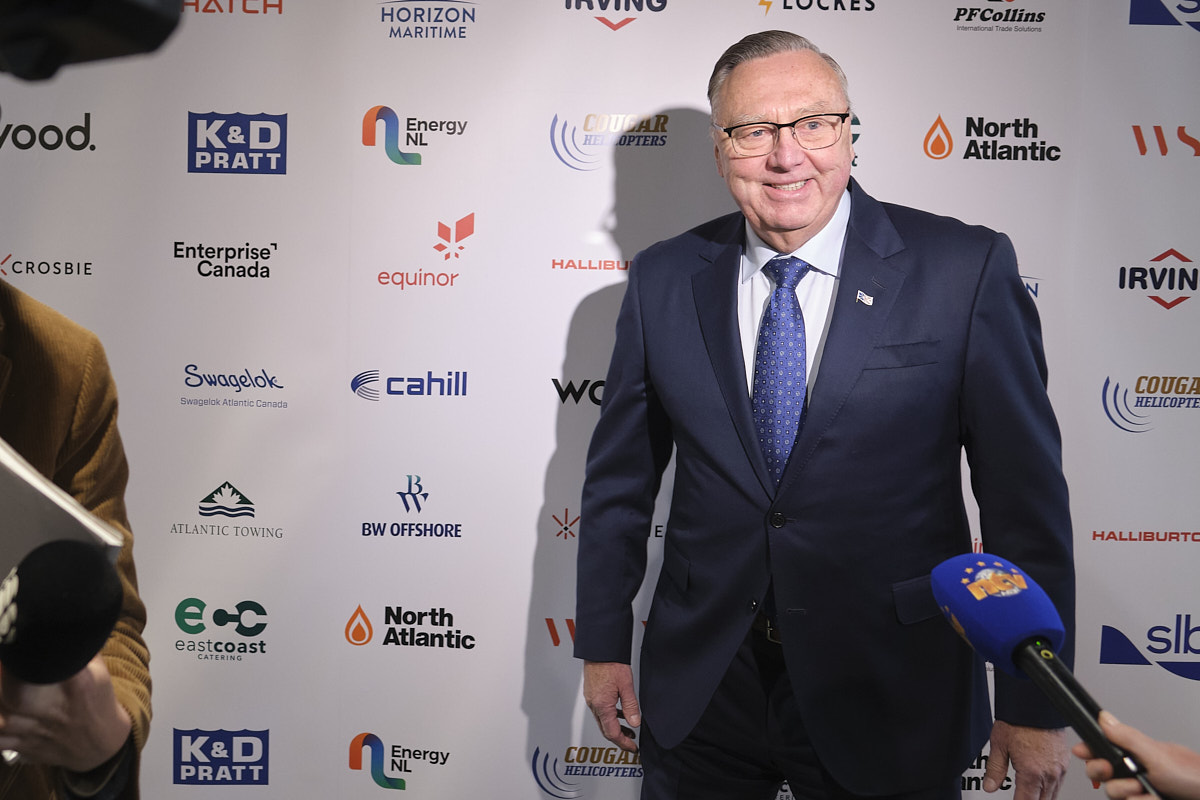
ST. JOHN’s, NL – When he was opposition leader, Tony Wakeham railed against investing money in the Future Fund. He said, “It does not make sense to borrow for the Future Fund”. ” It’s like using a credit card to open up a savings account,” echoed Finance Minister Craig Pardy once Wakeham’s Tories formed the government.
What they mean when they talk about “borrowing” money for the Future Fund is a result of an accounting manoeuvre.
It works like this: royalties from oil sales are deposited with the provincial government. Before Wakeham’s government changed the 2023 statute, the Government was legally bound to deposit a percentage of those royalties in the Future Fund. As of Dec. 31, 2025 that amounted to $524 million.
The Department of Finance explains it this way: “All provincial revenues are deposited into a single consolidated fund, regardless of source. . . Deposits into the Future Fund are made from this overall pool of funds, not from any one specific revenue source.”
So, if the “overall pool of funds” is forecast to be short $688 million in 2026/27, then according to Wakeham and Pardy that money has to be borrowed. What Wakeham and Pardy conveniently ignore is that the Future Fund deposits were a dedicated piece of the royalty revenue collected by the Province, and not an expense like an upgrade to the Outer Ring Road, for which there is no dedicated revenue source.
THE BIG RESET
In 2020, then Liberal Premier Andrew Furey appointed Dame Moya Greene to lead his “Economic Recovery Team,” for which the Future Fund is one of the few recommendations to be adopted. The Future Fund was designed to take oil revenue and lock it in a savings account until 2033 before dipping into it.
Wakeham’s amendments to the Future Fund legislation took effect on June 2. Gone is the mandatory deposit requirement. Gone is the lock on withdrawing funds until 2033.
Wakeham could raid the Future Fund. He hasn’t yet, though it appears the Premier has already withheld 2025 royalty revenue that was supposed to go into it.
According to Liberal Finance Critic Sarah Stoodley, “They diverted over $180 million that was legally bound to go into the future fund from 2025, to their general government spending in 2026-2027. They changed the law before the funds from last year had been actually placed in the Future Fund . . . for future generations and they took that away. For what?”
The answer is to finance their $688 million deficit, but Alex Whelan of the Fraser Institute says raiding the fund is a bad idea. “The solution is to rein in spending,” says Whelan.
Or, Wakeham could just do nothing and let royalties from the surge in oil prices finance contributions to the Future Fund and slash his deficit.
THE FISCAL GUSHER

Finance Minister Craig Pardy’s 2026/27 budget forecast NL oil price at US$79 per barrel.
Then, four days into the fiscal year OilCo, the manager of NL’s offshore oil equity, sold crude to a Welsh refinery for US$131.98 US. The war in the Middle East blew up everybody’s projections.
Pardy said every $1 over his $79 forecast would be worth $33 million over the course of a year. According to the Department of Finance the average price of Brent Crude in April 2026 was $117, or $38 more.
If prices stayed at US$117, that would mean an extra $1.15 billion in revenue.
Of course, the price of oil (as of this writing) has already come back to the US$79 in the forecast, but for April alone it equates to about $96 million in extra revenue, while prices remained high for all of May and most of June.
Pardy’s budget is also based on production of about 8 million barrels per month. According to the Canada Newfoundland Labrador Offshore Energy Regulator, 9.4 million barrels of oil were produced in April, or 1.4 million barrels more than forecast. More revenue on top of the April windfall.

WHY WHACK THE FUTURE FUND?
Maybe Wakeham and Pardy are just lucky. They forecast a $668 million deficit and by the end of April, the first month of the first quarter of the fiscal year, they’ve booked an additional $96+ million in royalties.
A U.S. Federal Reserve tracker reported the average Brent crude price was $106 US in May, exceeding the Budget forecast of US$79 a barrel by US$26, translating into an additional $70+ million in royalties.
Maybe this means Wakeham and Pardy don’t dip into the Future Fund to help reduce their deficit and the $524 million in the Fund grows from investment income. It’s annualized rate of return is 7.3%.
Maybe this means the Fund doesn’t get the share of the royalty revenue that used to flow into it. It appears that Tony Wakeham is grabbing the 2025 royalties even though the Future Fund Act was not amended until June 2, 2026.
Those appear to be the likely options. Too bad. It would have been nice to be talking about some of that April and May royalty windfall being put away in our grand children’s savings account.
~~~
This article was originally publish in The Shoreline.
Photography by Greg Locke © 2026 www.greglocke.com