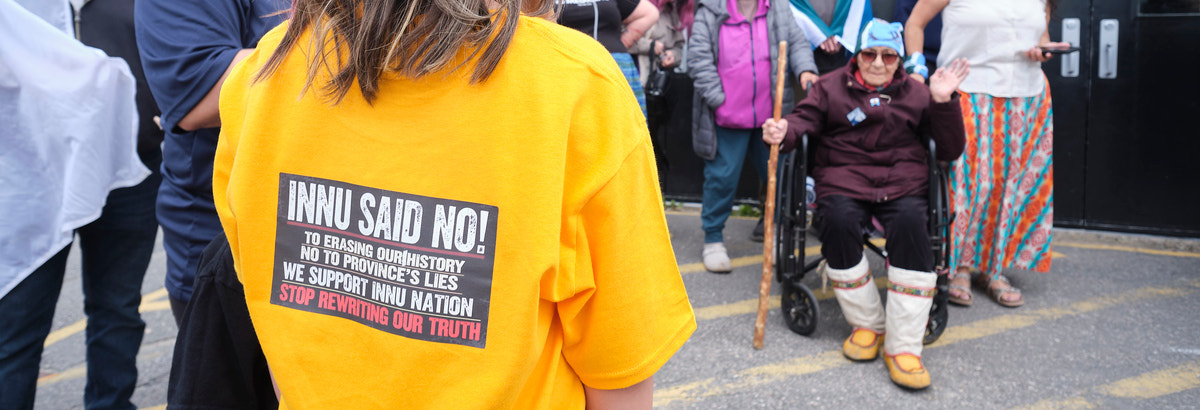
SHESHATSHIU, NITASSINAN (NL) – It hit like a bombshell. The order blocking the opening of an exhibition of lnnu culture and history seemed to come out of nowhere. It was BOOM followed by shock and disbelief.
Three days before Innu Pakassiun (Innu tools for survival), was suppose to open at the Labrador Interpretation Centre in North West River, Labrador right next door to Sheshatshiu Innu First Nations community, came a call from a director at The Rooms. They told organizers that their historical time line, how long they have been in Labrador, did not conform to the provincial governments official policy. They had to remove it from the exhibition. They even told that that the artifacts that they had in their possession (which came from proven Innu archaeology sites) cannot be connected to the Innu.
That was just three days before the June 21 the opening on National Indigenous People’s Day. A day for recognition and appreciation of indigenous history and culture. A time of reconciliation.
The Innu say this is a part of an ongoing government policy to erase Innu identity and deny them their rights guaranteed under Section 35 of the Canadian Charter of Rights as indigenous people.
There has been very little government response to the public outcry from indigenous groups, academics and the general public. Government pushed Lela Evans, Minister of Indigenous Relations and Reconciliation, towards to the media to do damage control. It didn’t go well. What has come from government is mixed messages of denial, blame shifting and what is and isn’t their official policy, mixed with classic blatant stone-walling.
INNU PAKASSIUN
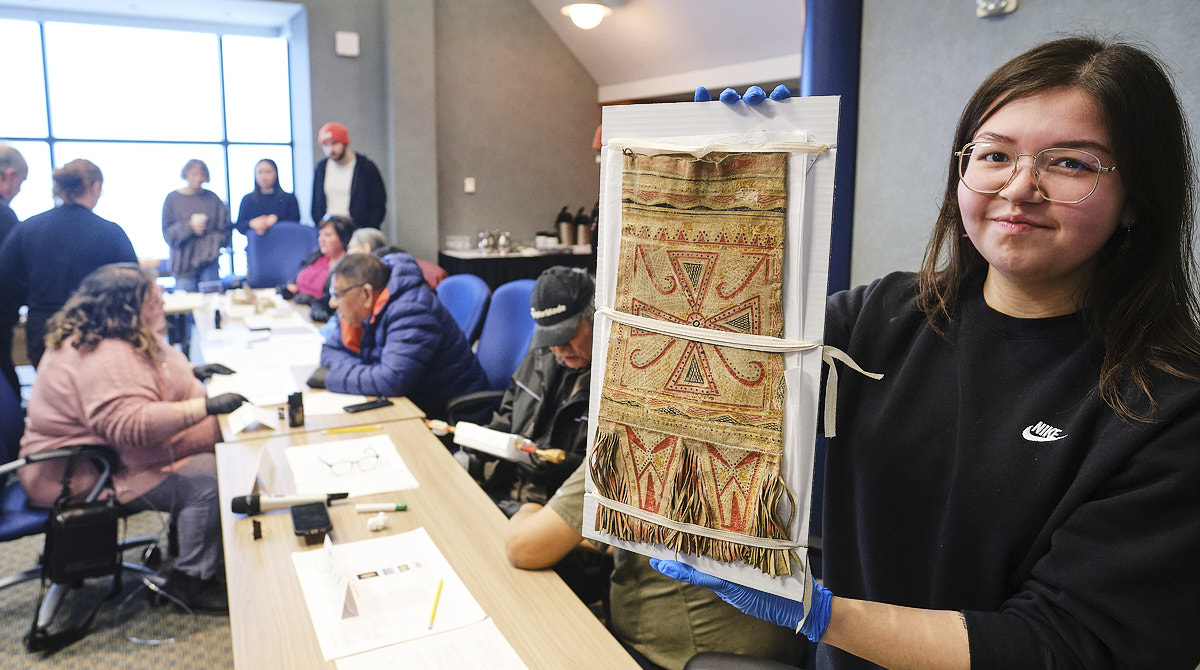
The repatriation of Innu cultural and historic artifacts and the exhibition have been in the works for many years. It was produced by the Innu Nation in collaboration with The Rooms provincial museum and archives and the Canadian Museum of History. Both hold archaeological and cultural artifacts belonging to the Innu.
Early in 2026 meetings and consultations took place at The Rooms in St John’s with staff from The Rooms, Canadian Museum of History, Innu elders and the people who designed and built the displays and exhibitions. The artifacts to be displayed, the language to be used were all discussed, finalized and agreed to by all parties. The week of June 16 the exhibition arrived at the Labrador Interpretation Centre in North West River and installation began.
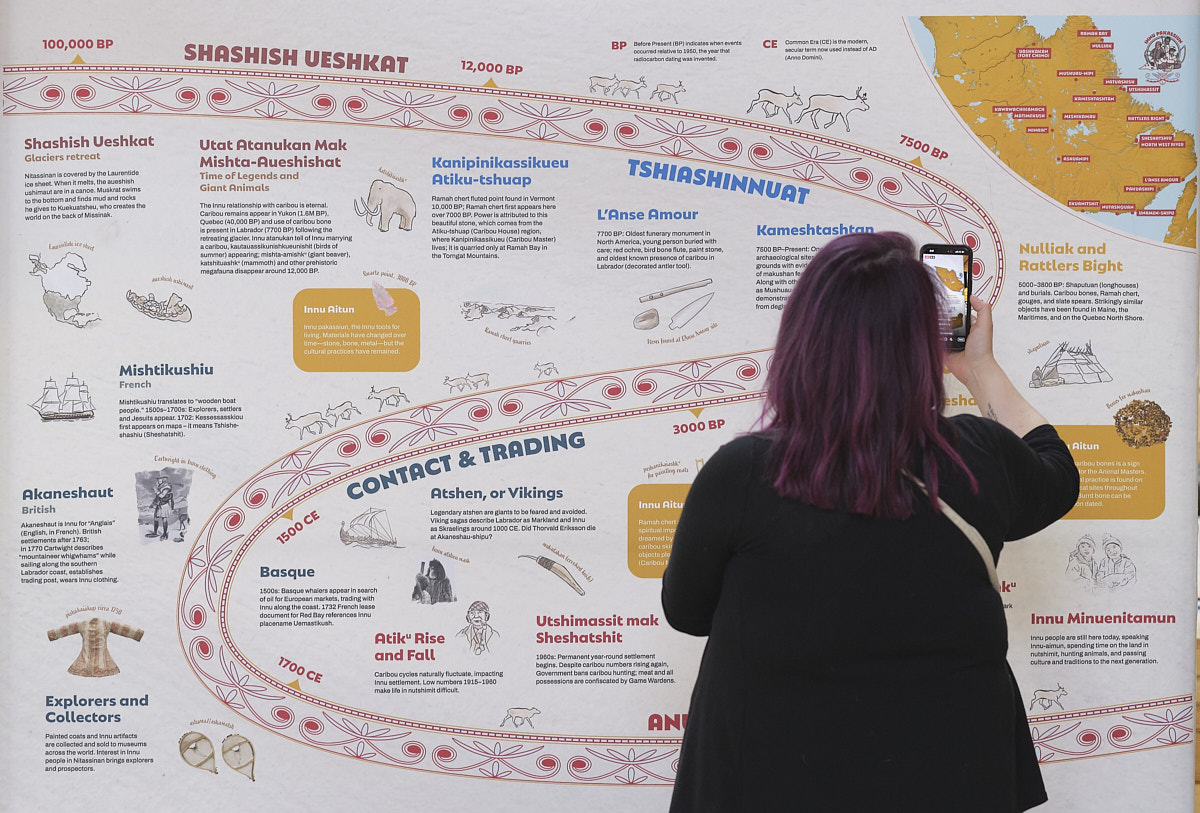
Three days before opening a call to Jodie Ashini, Innu Nation’s Cultural Guardian and organizer of the exhibition told her she has to remove all references to anything that said the Innu were on the land in Labrador longer the 300 years ago or they wouldn’t allow the exhibition to open. Despite government having already approved the content. Upon consulting with Innu leaders and elders she refused to remove the timeline as this is an insult to the Innu and contradictory to Innu oral history and mainstream archaeological evidence and anthropological studies by academics at Memorial University, Smithsonian Institute and Canadian Museum of History among others.
Calls to The Rooms for comment get directed back to the Premiers office. Calls to Andrea Barbour, the minister for Culture and Tourism and responsible for The Rooms go unanswered. Indigenous affairs minister Lela Evans says she didn’t know about the government demand to close the exhibit and media should call The Rooms. The Innu say the call came a director at The Rooms. The Premier claims no one in his office nor the Clerk of The Privy Council directed this.
TREACHERY AND PROTEST
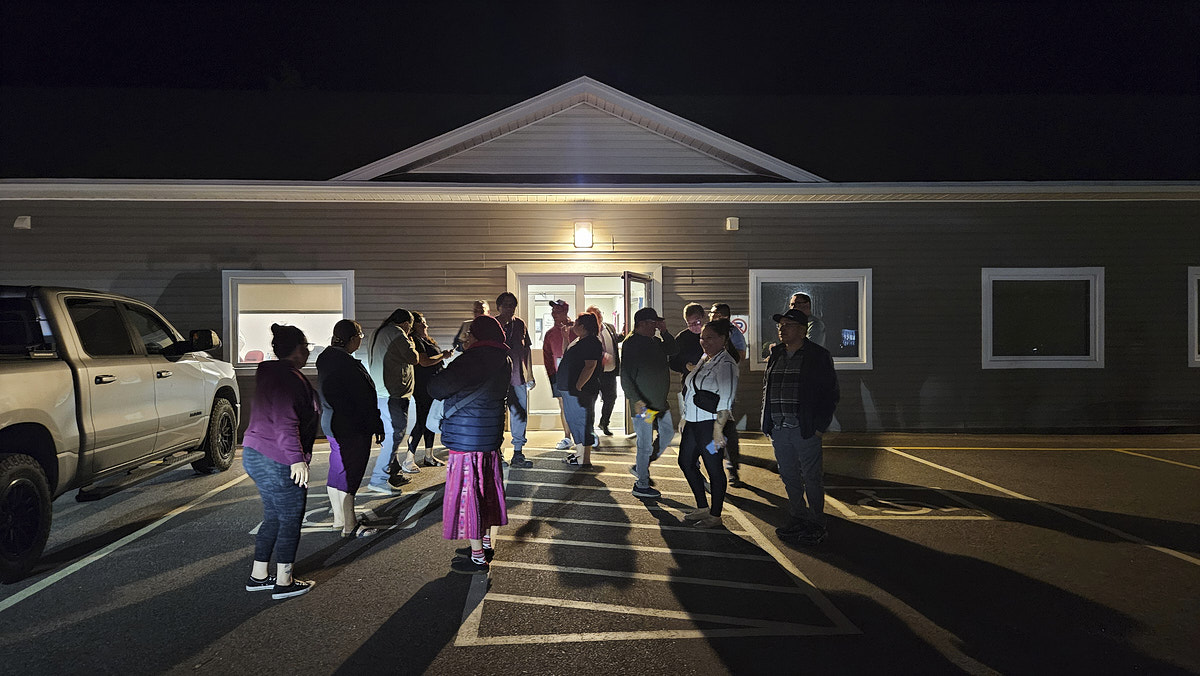
The night of June 22 Premier Tony Wakeham, Indigenous Affairs Minister Lela Evans and Inter-governmental affairs bureaucrat Aubrey Gover met with the Innu in local MHA Keith Russell’s office in Goose Bay. The meeting ended at 11:30 PM. It was tough and emotional. The Innu thought they had an agreement and the group would gather again in the morning where Wakeham would give them a written letter with what they had agreed to the night before.
It didn’t happen. The next morning the letter did not contain what they agreed to and did not remove the restriction of the 300 year timeline on the exhibition. Wakeham went off to give a speech at to the Chamber of Commerce at the Canadian Legion Building.
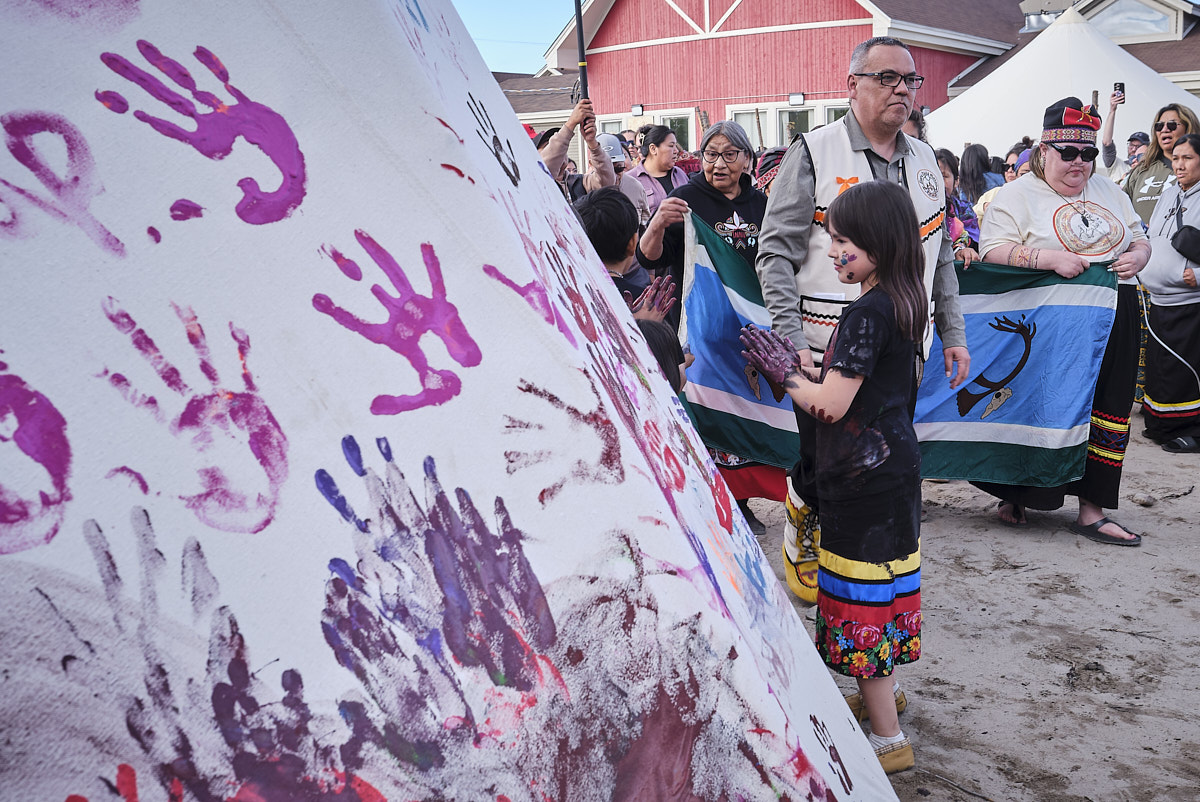
The Innu protested by blocking access to the building.
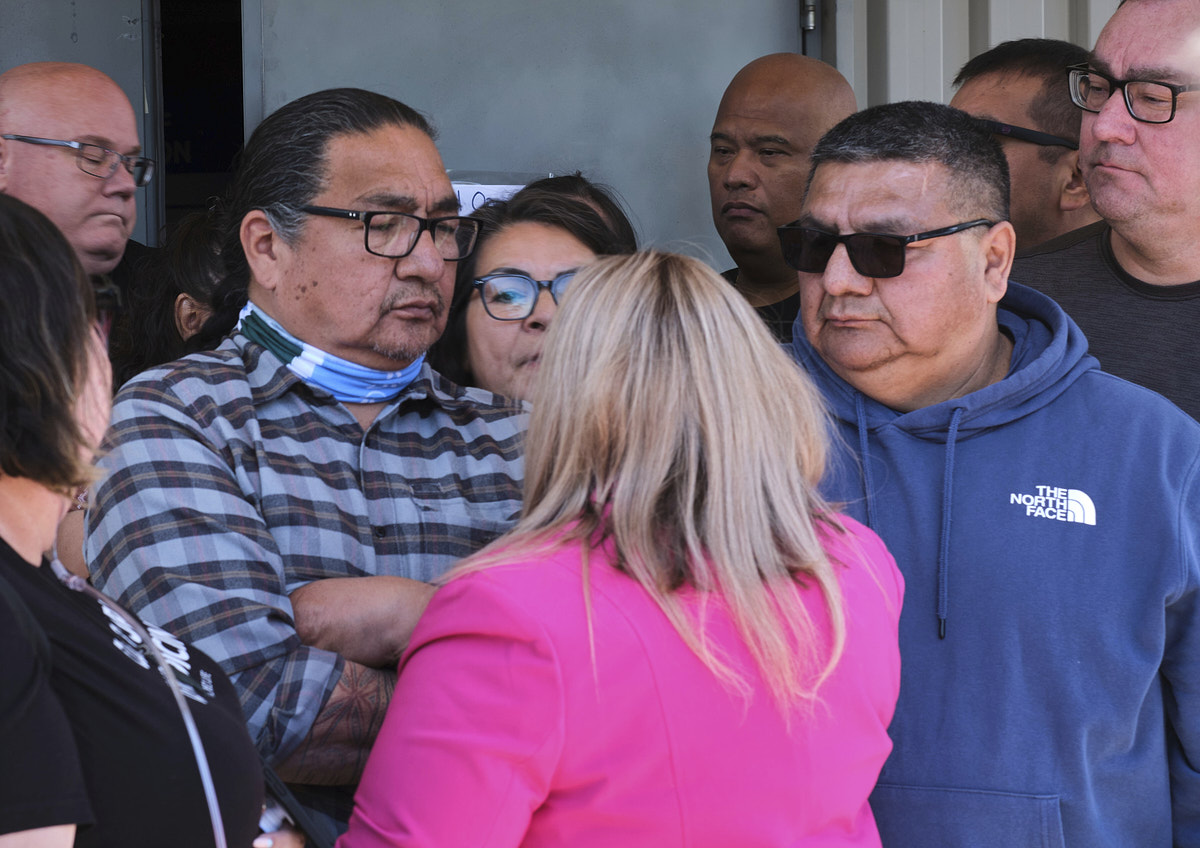
Notable was a confrontation between the Innu and Yvonne Jones. She arrived with former NL premier Roger Grimes. Jones was a long time Liberal MP and MHA for the region and member of the NCC (NunatuKavut Community Council ) a Labrador south coast group claiming indigenous status that also has a land claim that encroaches on Innu and Nunatsiavut Inuit land. It got very heated. Jones did not get into the building.
Wakeham left by the back door and flew back to St John’s.
The Innu then protested at Labrador Expo. A business conference for people doing business in Labrador. Which the Innu’s development company, IDLP, pulled out of the previous day in protest of the government decision to shelve the cultural exhibition.
Faced with the protest, the Labrador Expo chose to close down.
The crowd had gotten much larger by now and someone called the RCMP. When a corporal dressed for combat asked who was in charge one Innu man gestured to the crowd and said “all of us” . Then they ignored the Mountie.
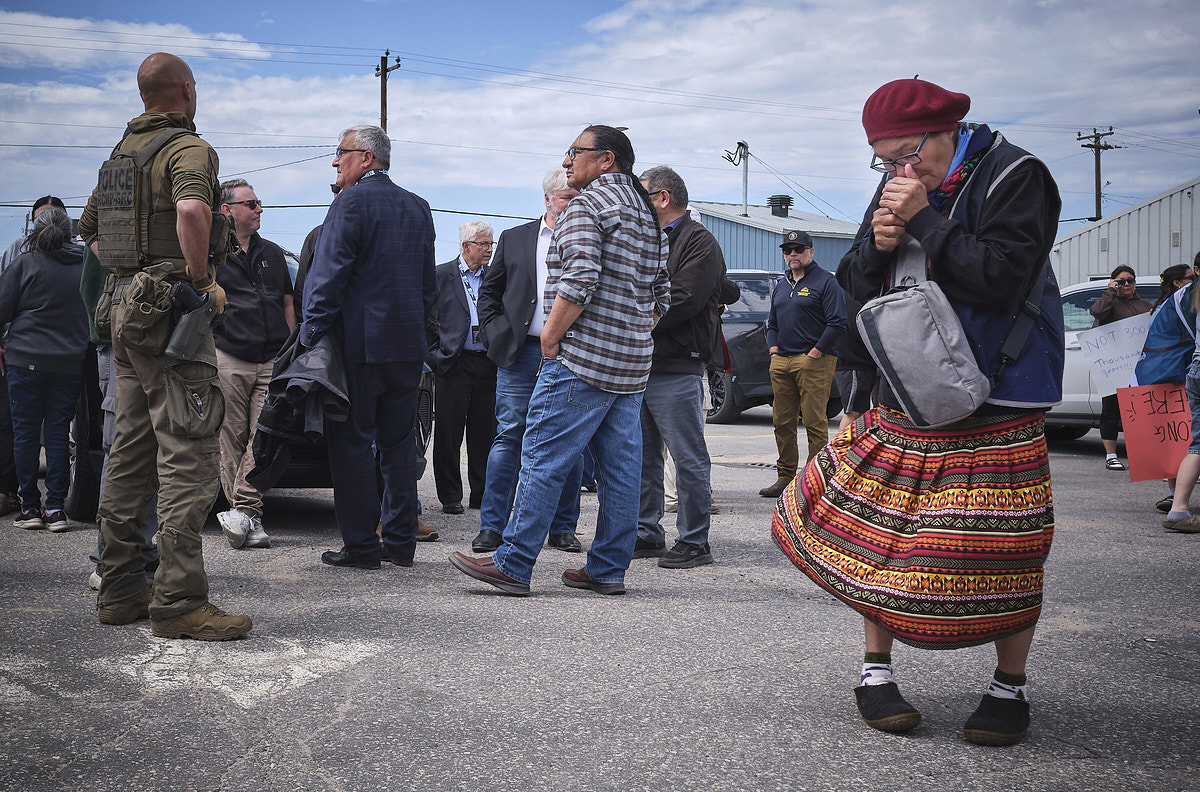
As a result of all this there is a closed Indigenous cultural exhibition on National Indigenous People’s Day and a cancelled business development conference because of a government decision that no one is taking responsibility for.
LELA EVANS TOSSED OVER THE BARRICADE
On July 3 Lela Evans granted an interview to CBC and later was given uninterrupted air time on VOCM open line with host Darren Bent. Neither did much to ease the tension or resolve the issue.
Evans, while expressing love for the Innu denied knowing much of anything about the closing of the exhibition, where the call came from or about the government’s policy to limit the Innu’s existence in Labrador to only 300 years. She also said Premier Tony Wakeham didn’t know anything about it either and that he didn’t order the closure of the exhibition. Evans did say government officials were investigating but insisted this has nothing to do with Innu rights or land claims. As a communications exercise in damage control it failed and raised more questions than it answered.
In a July 10 interview with APTN NEWS Evans said she didn’t know the Innu have Section 35 rights. When presented with a written statement from the federal government confirming Section 35 right for the Innu, she said, ” I don’t think this is on the record officially.” The Minister of Indigenous Relations and Reconciliation requested the reporter send it to her.
Evans comments in the interview and in statements to CBC and VOCM makes it sound like all this started last week and that they knew nothing about it at all – but now they are going to study it – to fix a problem her government’s own making. SOMEONE in government ordered up this problem and someone delivered it. Now others are trying to clean up their mess.
THE 300 THEORY
The theory that the Innu have been only in Labrador for 300 years comes from Jaime Brake and the Provincial Archaeology Office. (PAO) They wrote a paper stating this is based on his archaeological evidence. Physical artifacts he has found in Labrador which he can only date to 300 years ago while also claiming older artifacts and archaeological sites are not Innu. He attributes these sites to different people who he claims no longer exist.
The PAO also claim that early French explorers didn’t find any indigenous people yet Jacques Cartier’s ships records show they met indigenous people in what is now called Vieux Fort (Old Fort), Quebec in 1534. That date alone is 200 years before NL government’s policy.
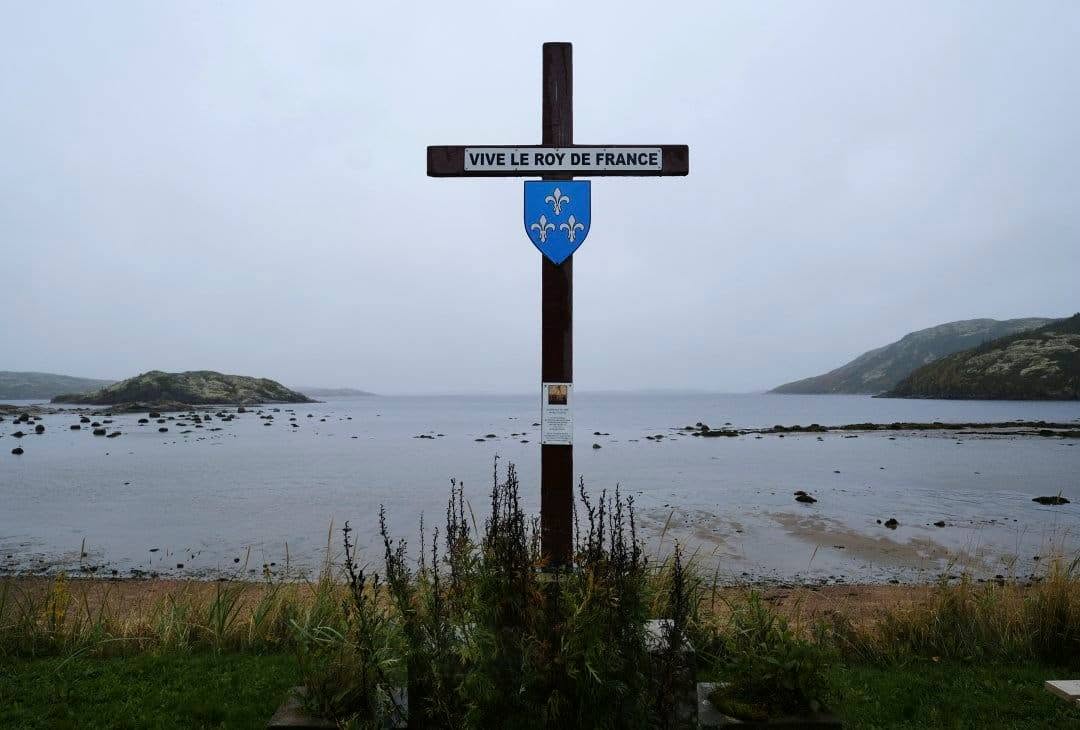
Vieux Fort is just south of Blanc Sablon and the Labrador border at the end of Highway 128. The name of the federal riding is Côte-Nord—Kawawachikamach—Nitassinan . They last two being Innu place names. Nitassinan is the Innu name for their traditional homeland.
Quebec archeologists have dated Innu sites along this coast going back 2000 years.
The 300 theory also ties in with a statement by Newfoundland’s first premier, Joey Smallwood in 1949 when Newfoundland was joining the Canada. Smallwood told the Canadian government there were no indigenous people in Newfoundland and Labrador. This became a part of the Terms of Confederation and locked out the Innu and other indigenous people from federal rights and benefits.
The “300 theory” has been used by government lawyers as evidence in court cases against the Innu for what provincial prosecutors call illegal hunting (known as The Caribou Trials by the Innu) but are rights the Innu have as being recognized under Section 35 of the Canadian charter of Rights and Freedoms. Federal law that the Government of Newfoundland and Labrador do not officially recognize because the land claims agreement has not been finalized. A negotiation the government has been dragging out and stalling for thirty years.
Note: The government’s evidence, the 300 theory, while brought as evidence in a number of court cases against the Innu, has never been actually tested in court. The NL government has always withdrawn charges when they see the case is not going well for them.
Brake’s work and the PAO theories have been called “fringe” by the Innu and others in the archaeological field. His work has not been peer reviewed and a growing list of archaeologists, anthropologists, historians and other indigenous groups have spoken out against it condemning the work and conclusions of the PAO. …see footnotes
THE DARK SIDE – LAND CLAIMS POLITIK
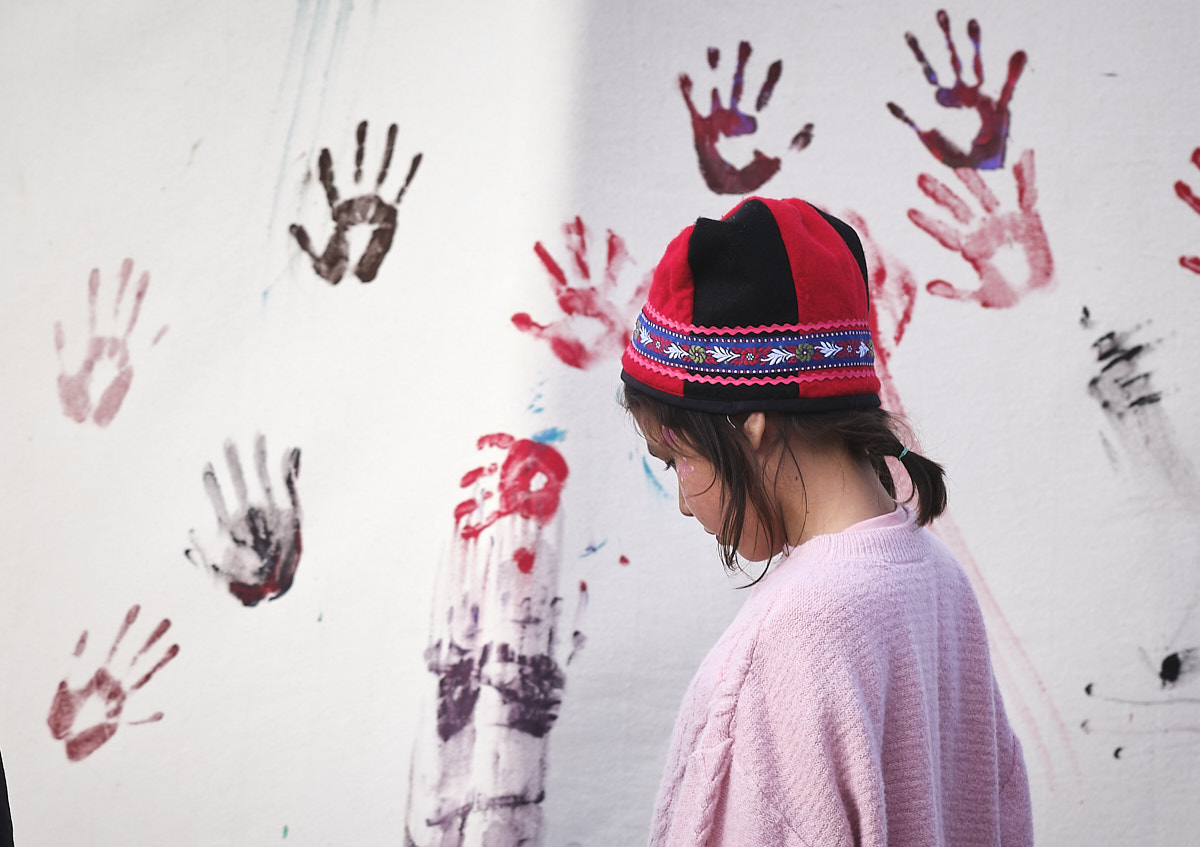
The obvious question is why? Why is government going so hard and expending political currency to maintain a discredited obscure archaeology theory?
It is tempting to write this off as just normal racism. That’s too easy. There is lots of racism in Newfoundland and Labrador towards its indigenous people (they did exterminate the Beothic) but in the end it is always about money and power with government and business.
Its not about the exhibition. That is just a flashpoint. Its about land claims, power and negotiating with the Innu on future development in Labrador. The development of mines and further hydro projects are on traditional Innu land (Nitassinan) and the Newfoundland government must negotiate with the Innu Nation and compensate them for loss of their territory if these projects are to go ahead.
If the Government of Newfoundland and Labrador can deny the Innu their history and their rights then they can destroy their land and not share the wealth. Hence, “they were only here for 300 years” …the same as the Europeans, becomes they don’t have indigenous rights.
It is as simple as that.
RADIO SILENCE
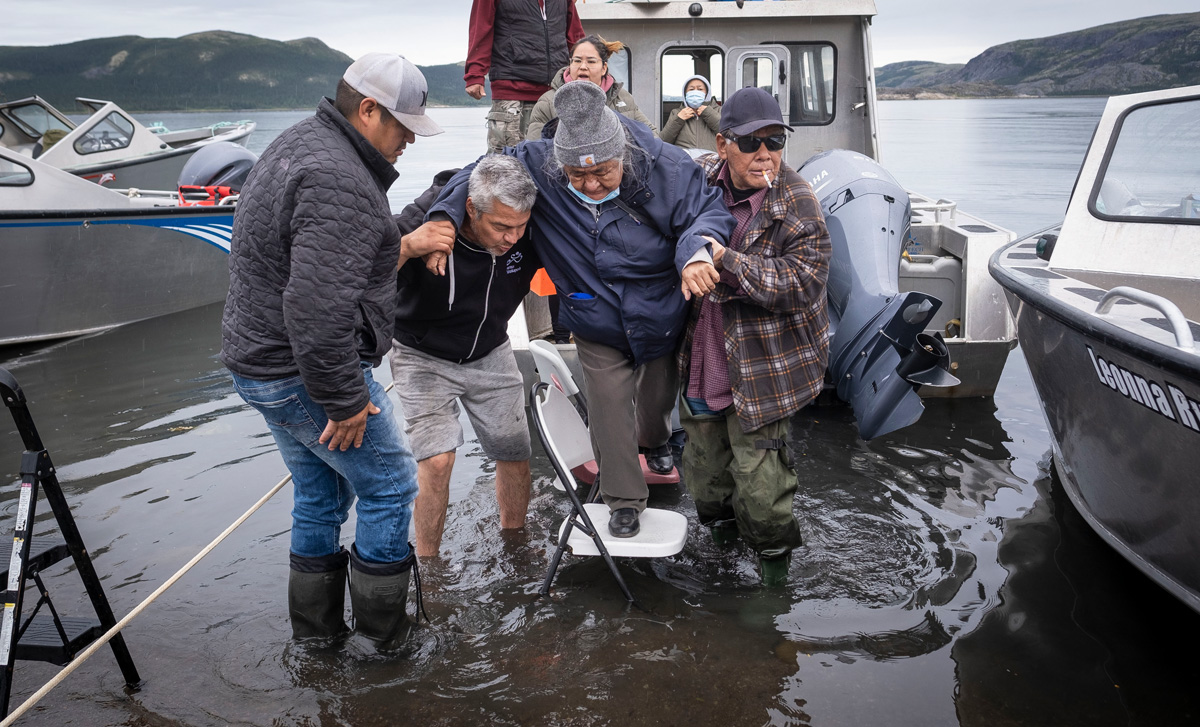
As of this date the government is still silent. Questions that still need to be answered by Premier Wakeham or Lela Evans …or Andrea Barbour, Minister responsible for The Rooms or the government lawyers.
– Who decided that what was accepted in the exhibit and signed off on is no longer acceptable.?
– Why is government accepting a theory that has been discredited broadly by the professional and academic community?
– Are government lawyers pushing to maintain this policy?
A MURDERED CULTURAL EXHIBITION
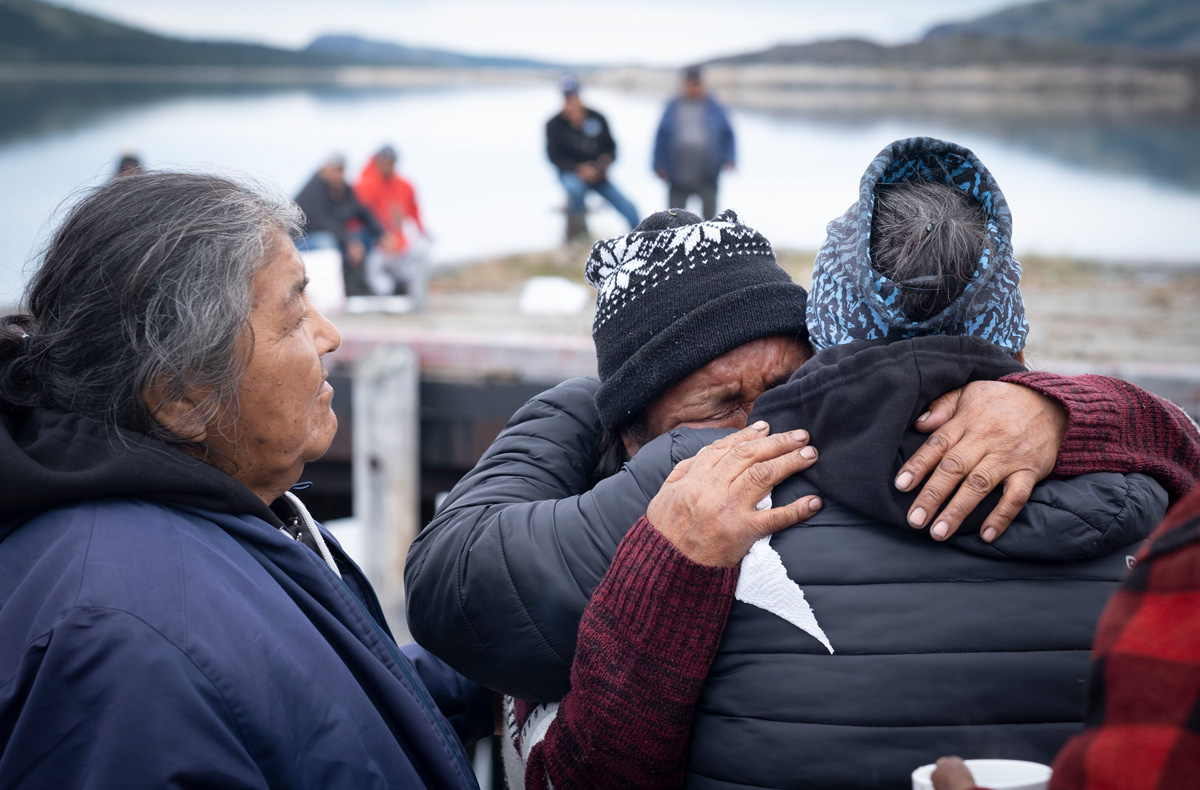
Innu Pakassiun was designed to be a travelling exhibition. After its opening in North West River it was expected to be installed at The Rooms in St John’s. That seems unlikely now considering the government told the Innu they can’t show the exhibition in one of their buildings. They were told to get their own building and then they can do whatever they want.
Residents of Newfoundland and Labrador will now have to travel to the Canadian Museum of History in Gatineau, Quebec sometime in the future to learn about the true history of the Innu, the indigenous people who pre-dated European colonization in their province by many thousands of years and still trying to be erased by their government.
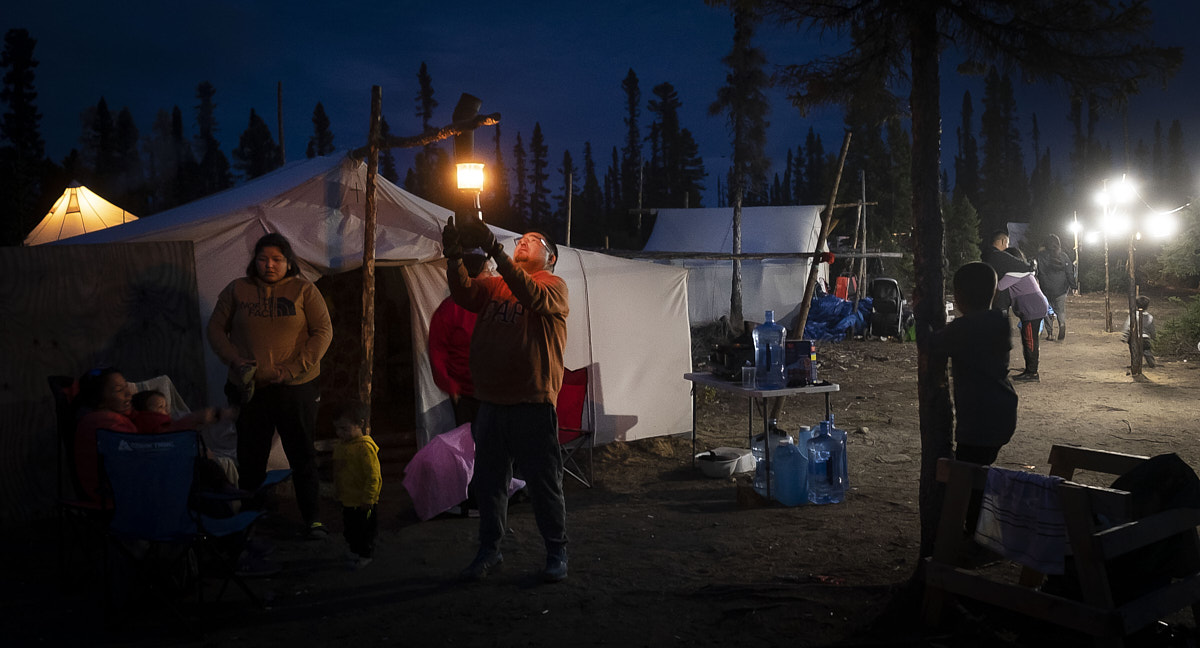
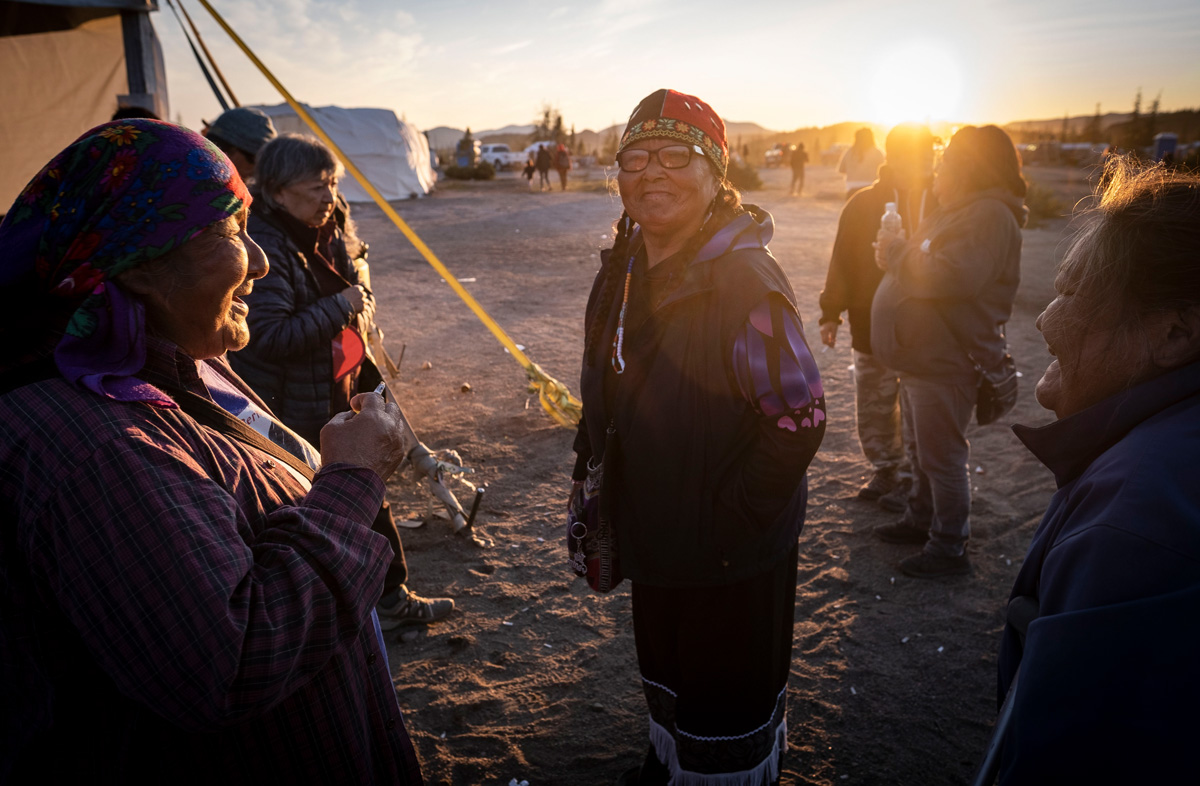
All photography by Greg Locke – www.greglocke.com © 2026
~~~
Footnotes: List of people and organizations speaking out against the Government of Newfoundland and Labrador in support in the Innu.
Memorial University Anthropology and Archaeology Department, (Link to letter)
Stephen Loring, Smithsonian Institute, (CBC Radio Interview)
School of Arctic and Sub-arctic Studies, Labrador Campus, Memorial University.
John E Bishop, Historian. Cree Nation (Link to letter)
Meawpukak First Nations (Link to letter)
Chefs de la Nation Innue au Québec – Quebec Innu Chiefs
Assembly of First Nations of Québec and Labrador APNQL – AFNQL
Anthony Jenkins, Archeologist.
Moira McCaffrey, an archaeologist at the Canadian Museum of History with extensive experience working with the Innu says the NL government is in a conflict of interest. She was a consultant on Innu Pakassiun. (CBC RADIO INVU)
Canadian Human Rights Commission See the Canadian Human Rights Report
Section 35 of the Canadian charter of Rights and Freedoms.
You may also like;
Tipatshimuna – The Innu and Their Territory
An exhibit of Innu culture and history killed by Newfoundland government,
INNU – The Last Nomadic Hunters of North America. A photo essay by Greg Locke
Innu file suit as human rights report slams Canada for abuse – Canadian Journalist
~~~
SQUAWK! If you enjoy this work. Please feed the Gammy Bird.
If you like the The Gammy Bird please consider a donation to keep the the squawks, stories, pictures and videos flying. We use PayPay for one-time or reoccurring fast secure payment. We also accept etransfer to office@straylight.ca. The Gammy Bird is produced by Stray Light Media, Inc in St John’s, Newfoundland, Canada.









[…] See, The Messy Business of Erasing Innu History. […]