by Jason Pike
St Lawrence, NL.
The “Small-Town Mentality” and why it needs to change. For years I’ve heard people talk about the so-called negative small-town mentality. The idea that people become complacent, convinced that things cannot change because “this is the way it’s always been.”
Recently, I began to understand its something deeper.
Often, the belief that something can’t happen isn’t reality at all. It’s a situation created and maintained by the people who hold that belief.
I grew up in a small town with far fewer amenities than any urban centre. We didn’t have the conveniences cities take for granted, but somehow we always found our own versions, concerts, local sports, entertainment, gatherings, smaller in scale but rich in community spirit.
Over time, however, those things began to disappear.
In the past year especially, we’ve seen more losses: fewer services, reduced healthcare access, government offices closing, and everyday conveniences becoming harder to reach. What once felt normal in rural life now feels increasingly distant.
After spending twenty-five years living in an urban environment and after facing serious personal medical challenges, I made the decision to move back home to a town of roughly 1,200 people.
The adjustment was profound.
Suddenly, the conveniences I had grown accustomed to were gone. There were no spontaneous trips to the movie theatre with ten films to choose from. The closest theatre now sits forty minutes away, open only a few nights a week with a single evening showing. Live entertainment is rare. The casual experience of seeing a band on a weeknight or enjoying live music over lunch simply doesn’t exist here anymore.
Sports look different too. Instead of large leagues with dozens of teams, several communities must combine players just to field one competitive team — often travelling four hours or more to compete. Facilities are aging, underused, or sometimes unavailable altogether.
And yet, something unexpected happens when conveniences disappear. You learn to appreciate experiences more deeply. Moments become memories because they are rare. Scarcity, oddly enough, can create meaning.
Returning With New Eyes
For nearly twenty years, I worked as an entertainment promoter across the province. After COVID, the industry changed. People stopped going out the way they once did. The social habits that sustained live entertainment never fully returned.
But my life shifted when my child became deeply involved in sports.
Being part of that community, supporting young athletes, travelling, volunteering, became one of the most rewarding aspects of returning to rural Newfoundland. The school my son attends has only about twenty students across Grades 10 through 12, yet it consistently achieves excellence both academically and athletically.
With limited resources, this small school won two provincial soccer championships in a single year without even having a regulation-size soccer field.
That fact stayed with me.
This school feels less like an institution and more like a family. In a time when many communities feel fractured, it represents something rare, genuine community spirit.
With extra time on my hands due to health limitations, I began driving through nearby areas, photographing places that once thrived but had since been forgotten. I started asking myself a simple question:
What still exists beneath the neglect?
The Forgotten Field
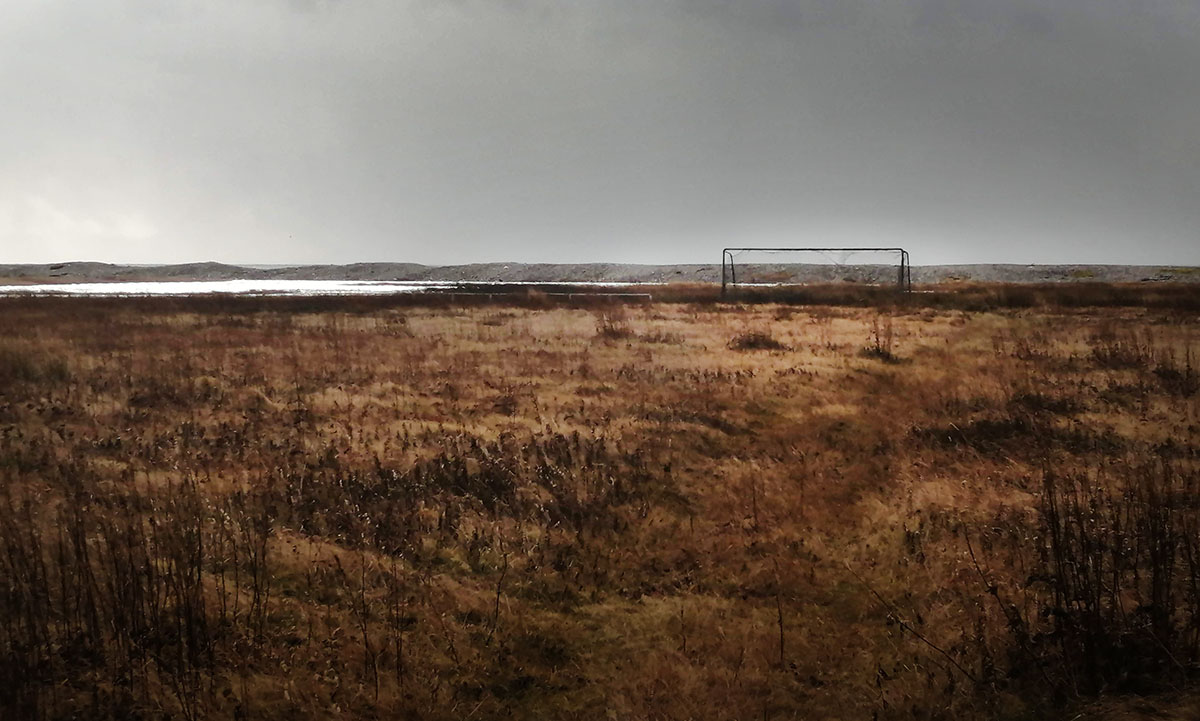
On the outskirts of one community sits an abandoned soccer field.
Years of overgrowth have swallowed it. Grass and moss stand several feet high. No ball has been kicked there in longer than I had been away. At first, restoring it was just an idea. Then it became a passion project.
My goal was simple, reclaim the space without costing anyone anything. No funding requests. No financial burden. Just volunteer effort, borrowed equipment, and community goodwill to restore a green space for local youth.
When I spoke to residents, the response was overwhelmingly positive. Many told me they had thought about doing the same thing for years but never knew where to begin.
Support was there even if hands-on help was limited. And honestly, that support mattered. Because there is nothing negative about trying to restore a shared community space.
When Negativity Arrives
Then came the pushback.
Out of dozens of supportive voices, three individuals became loudly opposed online. They argued the field floods, that restoration would be pointless, that it was a waste of effort. Some even told supporters to “mind their own business” because they were not from the immediate community.
The criticism wasn’t constructive. It wasn’t solution-based. It was discouraging for the sake of discouragement.
Yes, the field sits near a river. Yes, flooding may occur. But problems invite solutions. Drainage ditches, culverts, weeping tile, or simple engineering adjustments. After all, the field existed and functioned for many years before neglect set in.
Why oppose something that costs nothing, harms no one, and benefits local children?
That question remains unanswered.
The Real Challenge Facing Small Communities
I’ve since spoken with people from other rural towns who share nearly identical stories. One or two determined voices working harder to stop progress than others work to create it. In communities already facing declining resources and limited outside investment, this mindset becomes particularly damaging.
Small towns do not fail because people lack ideas. They struggle when belief disappears.
Negativity spreads quickly. A few discouraging voices can overshadow many quiet supporters. But communities survive and thrive when individuals choose cooperation over division.
Staying the Course
Despite the criticism, I remain committed.
In the twenty-four hours following the push back, I had already sourced scavenged materials that could help address the very flooding concerns being raised. Progress continued, regardless of opposition.
Because at the end of the day, those who do not support the project are not required to participate. But they also should not prevent others from trying. This lesson extends beyond a soccer field.
In my own hometown, our curling club has remained closed since COVID, facing an estimated $1.6 million in remediation costs. When I approached council with ideas to reduce that burden, progress felt slow — even frustrating. Yet careful analysis has revealed potential avenues worth exploring.
Change rarely happens easily. But it never happens at all if nobody tries.
Moving Beyond “Small-Town Mentality”
The phrase small-town mentality is often used as criticism. I believe it can become something else entirely.
Small towns possess resilience, creativity, and community bonds that cities often envy. What must change is not the size of the community but the willingness to imagine possibility again.
Progress does not always begin with funding or policy. Sometimes it begins with one person looking at an abandoned field and refusing to accept that its story is over.
And sometimes, overcoming negativity is the first act of rebuilding a community itself.
~~~